
Treatment Engineered for Your Makeup Water.
Steam, hot water, condensate return. Treatment programs designed around the specific chemistry of your makeup water and the operating pressure of your boiler. Oxygen scavenging, condensate protection, alkalinity management, layup protocols — built into a single chemistry program, not bolted together.
Industrial boiler water treatment protects steam-generating equipment from scale, corrosion, and carryover through chemistry programs designed around your operating pressure and makeup water. The program combines dissolved oxygen scavenging, condensate amine treatment, cycles-of-concentration control, and pressure-appropriate inhibitor selection — matched to your specific boiler and steam plant, not a generic recipe.
Feedwater · Boiler Water · Condensate
Each phase has its own chemistry job. Programs handle all three together — not just the boiler drum.
Feedwater Phase
Pre-boiler chemistry: makeup softening or RO, dealkalization where alkalinity is high, oxygen scavenging via sulfite/erythorbate/DEHA, and pH adjustment. The goal is to deliver feedwater that won't fight the boiler chemistry.
Boiler Water Phase
Internal treatment for residual hardness, silica control, oxygen removal, sludge conditioning (phosphate, polymer), and antifoam where carryover risk exists. Blowdown control sets cycles of concentration and limits TDS accumulation.
Condensate Phase
Neutralizing amines for pH control, filming amines for surface protection, or combined programs for distributed steam systems. Neutralizing amine blends are formulated with FDA Title 21-approved raw materials and GRAS-compliant where food-contact steam applications apply. CO₂ from bicarbonate decomposition becomes carbonic acid in condensate — left untreated it eats the condensate return system from the inside.
A 1/16-inch deposit on a boiler tube can cause up to 20% fuel efficiency loss. State-of-the-art dispersion polymer chemistry keeps the waterside clean — protecting fuel efficiency, asset life, and operating cost.
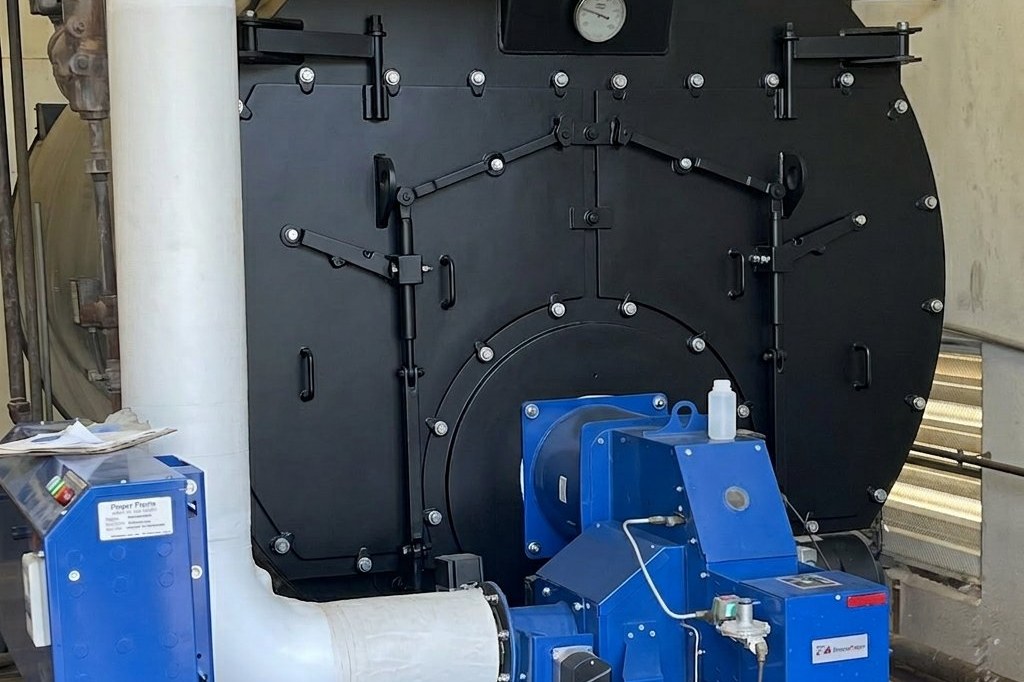
Idle Boilers Corrode Faster Than Operating Ones.
A boiler sitting idle without chemistry protection is being eaten by oxygen and moisture every hour. Wet layup fills the boiler with treated water carrying chemistry that prevents corrosion during shutdown — appropriate for short or planned outages. Dry layup drains, dries internals, and uses desiccants — for longer shutdowns or freeze-prone environments.
Lone Wolf programs include layup protocols sized to your shutdown patterns: planned summer outages on heating boilers, seasonal swing on industrial systems, or extended turnarounds in chemical and refining plants. Documented procedures, not "we'll figure it out when we shut down."
- Wet layup chemistry & procedure
- Dry layup procedure & desiccants
- Pre-shutdown chemistry adjustment
- Return-to-service flush + recommissioning
- Mothball procedures (multi-year)
- Layup chemistry monitoring
Boiler FAQ
What is oxygen scavenging?
Oxygen scavenging removes dissolved oxygen from boiler feedwater before it reaches hot metal surfaces. Even at low ppb levels, oxygen drives pitting corrosion in steam drums, downcomers, and economizer tubes. Common scavengers include sulfite, hydrazine (where allowed), DEHA, carbohydrazide, and erythorbate, selected by operating pressure and food-contact requirements.
What goes wrong with condensate return?
Carbon dioxide carried with steam becomes carbonic acid when it condenses, eating condensate piping from the inside. Amine treatment (filming, neutralizing, or both) protects the condensate return system and recovers feedwater quality. Untreated condensate corrosion is one of the most expensive failures in a steam plant.
What is wet vs dry boiler layup?
Wet layup fills the boiler with treated water carrying chemistry that prevents corrosion during shutdown. Dry layup drains and dries the boiler internals. Choice depends on shutdown duration, ambient conditions, and the boiler's return-to-service timeline. Both protocols require chemistry steps to be effective.
How does cycles of concentration work in a boiler?
Boiler blowdown is set to limit total dissolved solids and silica accumulation in the boiler water. Cycles of concentration is the ratio of boiler water TDS to makeup TDS. Higher cycles save water and heat (less blowdown) but require careful chemistry control to prevent scale, foaming, and carryover.
Do you write boiler chemistry layup procedures we can give our operators?
Yes. Written layup procedures specific to your boiler, makeup chemistry, and shutdown scenario — handed off to your operations team and integrated into your shutdown checklists.