
Programs Built Around Your Makeup Water Chemistry.
Cooling tower chemistry isn't a checklist. Cycles of concentration, LSI, biocide rotation, Legionella risk under ASHRAE 188 — they all move together. We design programs around your specific system conditions, then adjust as conditions change.
Industrial water treatment prevents scale, corrosion, biological growth, and equipment failure across the water-using systems in your facility — cooling towers, boilers, closed loops, reverse osmosis, and wastewater. Each system family has its own chemistry, regulatory profile, and failure modes. Programs are designed to your specific makeup chemistry and operational load, not bolted on from a template.
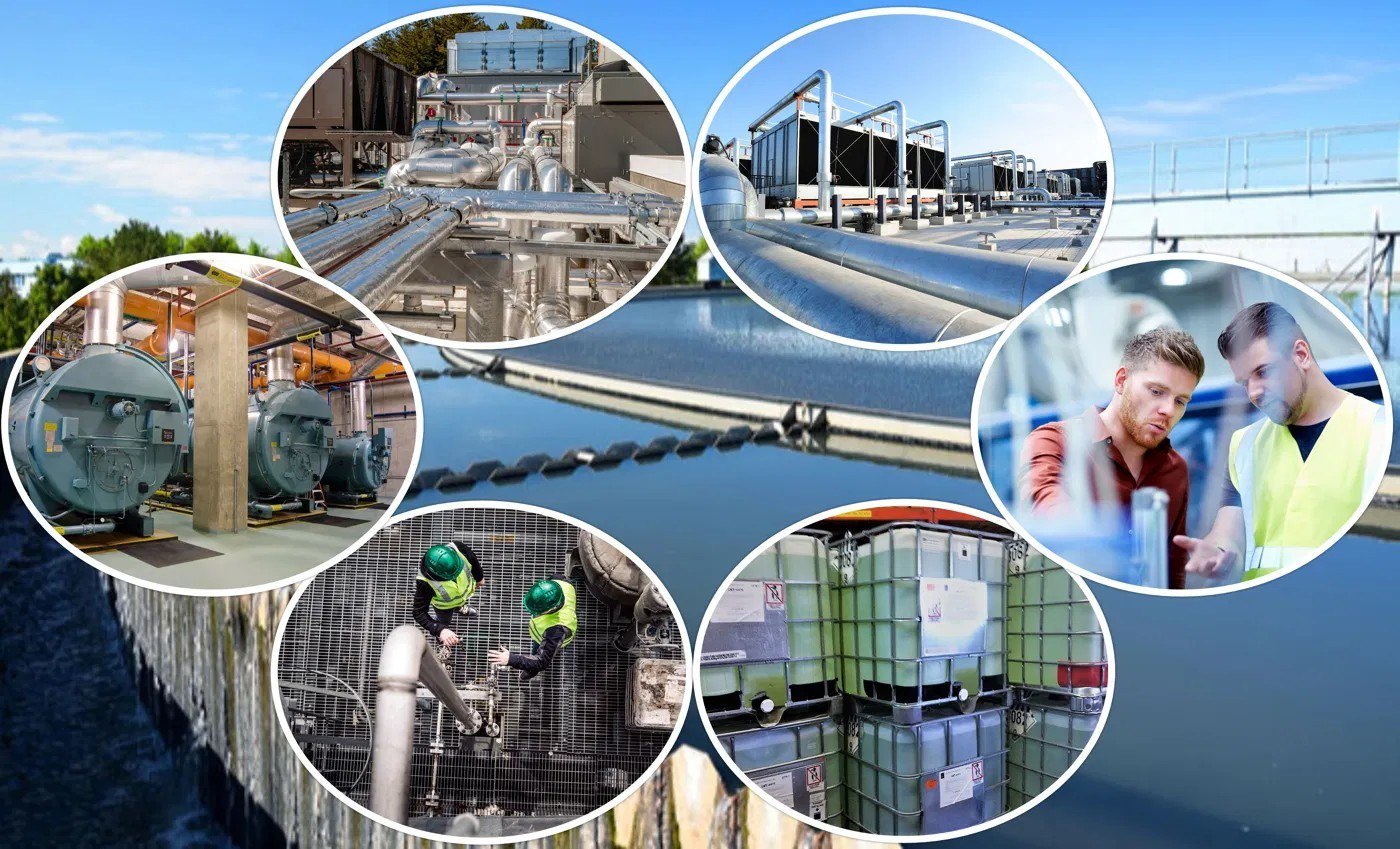
Five System Types, Five Chemistry Approaches
Each system family has its own chemistry profile, regulatory load, and failure modes. We don't bolt the same program onto everything — we build to the system in front of us.
Lone Wolf engineers Integrated Treatment Technologies Programs — chemistry packages designed to reduce overall chemical consumption while protecting equipment, meeting environmental policy goals, and minimizing regulatory pressure. Operationally responsive, environmentally responsible.
Cooling Towers
Open recirculating, evaporative condensers, induced-draft. Scale and corrosion inhibitors sized to your LSI. Oxidizing + non-oxidizing biocide rotation. ATP-monitored biological control. Blowdown management tied to cycles of concentration.
Cooling tower programs →Boilers
Steam, hot water, condensate return. Treatment programs engineered for your makeup water chemistry. Oxygen scavenging, layup protocols, condensate return protection. Built to keep firetubes and water sides clean across cycles.
Boiler programs →Closed Loops
Chilled water, heating loops, process loops. Near-zero makeup environment with its own corrosion, oxygen-scavenging, and biological-control calibration. Programs include initial passivation and ongoing inhibitor maintenance.
Closed-loop programs →Process Water Systems
Once-through cooling, high-purity water for production, plant utility water. Each system gets its own chemistry profile tied to feedwater quality, throughput, and downstream equipment requirements — not a copy of the cooling tower program.
Treatment equipment →Wastewater Treatment
Pretreatment, neutralization, metals removal, biological reduction, discharge compliance. Programs sized to your effluent permit, downstream treatment infrastructure, and the operating realities of your process — not a generic discharge formula.
Wastewater programs →Closed-Loop Chemistry — Different From Open Cooling, On Purpose
Closed loops (chilled water, hydronic heating, process recirculation) operate at near-zero makeup. Programs focus on long-term inhibitor maintenance and bacterial control in a captive water environment — not continuous makeup chemistry.
Corrosion Control Across System Metals
Closed loops contain ferrous components (mild steel piping, pump bodies) alongside yellow-metal components (copper coils, brass valves). Inhibitor blends protect both — molybdate or nitrite for ferrous, azoles for yellow metals — sized to system volume and metal surface ratio.
Aerobic + Anaerobic Biological Control
Closed systems still grow biofilm. Aerobic populations establish at oxygen-ingress points; anaerobic populations like sulfate-reducing bacteria (SRB) thrive in stagnant zones and drive under-deposit corrosion that opens pinhole leaks. Closed-loop biocides target both populations.
Side-Stream Filtration to Sub-Micron
Continuous side-stream filtration to under 0.5 microns removes precipitated solids, biofilm fragments, and particulate that accumulate during operation. Bag, cartridge, or media filtration sized to system volume and turnover targets — integrated into the program from day one.
Initial Passivation + Ongoing Maintenance
New systems and post-repair commissioning include initial passivation to lay down a stable protective film before service. Ongoing visits monitor inhibitor concentration, biological activity, and filter pressure differential — chemistry adjusted to the readings.
Chemistry Decisions Tied to Real Readings, Not Defaults
Every program starts with a site evaluation: makeup water sample, system walkthrough, current chemistry review, and a look at the last 12 months of service records (if any exist). From there, we draft a program proposal that specifies inhibitor selection, biocide rotation cadence, dosage targets, and monitoring schedule.
Once running, every site visit ends with a written report tying the day's chemistry adjustments to the readings that triggered them. When ATP spikes or conductivity drifts, you hear from your rep before it becomes a bigger problem.
- LSI & conductivity-sized inhibitors
- Oxidizing biocide + ATP monitoring
- Non-oxidizing rotation cadence
- ASHRAE 188 Legionella protocols
- Cycles-of-concentration targeting
- Documented service reports
Eight Outcomes Our Programs Are Built Around
Procurement and operations leadership look at chemistry programs through eight lenses. Every Lone Wolf program is designed to deliver against all eight — not three.
Assured Continuous Operation
Programs designed to prevent unplanned shutdowns from water-side failures, scale, or microbial events.
Improved Productivity
Clean heat-transfer surfaces and consistent steam quality keep production on schedule, not on the maintenance log.
Reduced Utility Costs
Optimized cycles, deposit-free heat transfer, and right-sized chemistry drive fuel, water, and sewer savings.
Environmental Responsibility
Lower chemical consumption, controlled discharge, and water conservation as program defaults — not afterthoughts.
Conserve Water & Energy
Higher cycles of concentration, blowdown optimization, and efficient heat transfer reduce both inputs.
Extend Equipment Life
Corrosion and scale control protect boiler tubes, condensers, and heat exchangers from premature replacement.
Minimize Risk & Liability
ASHRAE 188 compliance, documented procedures, and audit-ready records reduce regulatory and insurance exposure.
Ensure Employee Safety
Documented chemistry handling, properly labeled products, SDS access, and on-site training reduce incident risk.
Let Us See Your System First.
Every program proposal starts with a site visit at no charge. We walk your tower or boiler, sample your makeup and recirculating water, review whatever service records you have, and write up a baseline assessment with specific program recommendations. No pressure, no proposal-on-the-spot — just a clear read of where you are.
Frequently Asked Questions
What system types does Lone Wolf treat?
Cooling towers, boilers, closed loops (glycol and chilled-water), reverse osmosis and purification systems, and industrial wastewater. Each family has its own chemistry profile, regulatory load, and failure modes — we build to the system in front of us rather than bolting the same program onto every account.
How is your program different from a national chemical company?
Same rep on every visit. No contracted service tiers, no upsell pressure from a national sales quota. Chemistry and equipment recommendations are vendor-neutral — we source from established OEMs based on your facility's needs, not on internal brand contracts. Written proposals with fixed pricing before any chargeable work begins.
What is included in a standard water treatment program?
Baseline site evaluation, chemistry selection sized to your makeup water and system conditions, scheduled on-site service visits with documented reports, ATP monitoring on cooling systems, ASHRAE 188 compliance documentation where applicable, and 24/7 rep availability for after-hours emergencies. Program scope is defined in writing before contract.
How often does the rep visit?
Service cadence is set at program design — typically weekly to monthly depending on system criticality, size, and regulatory load. Emergency visits are covered under the same engagement and don't require separate authorization. Between visits, your rep is reachable by cell, email, and direct line.